






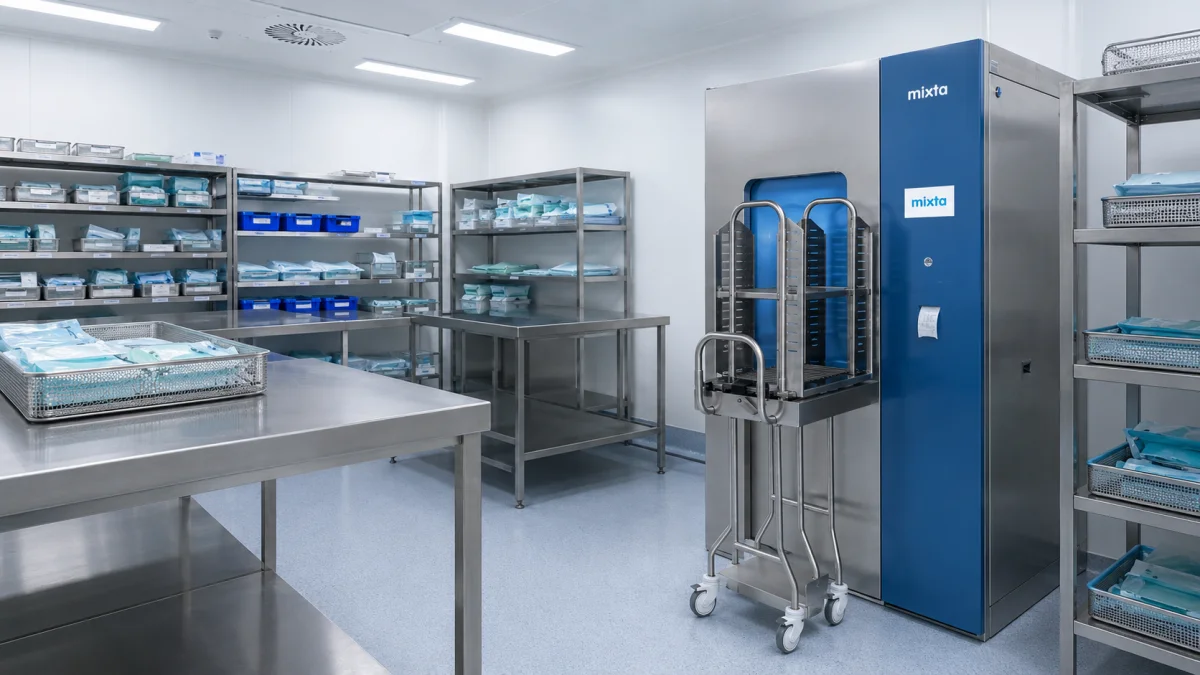
Types of Autoclave Sterilizer: Flash, Single-Door & Double-Door Guide
Healthcare-associated infections (HAIs) cost the US healthcare system an estimated $14.9 billion per year and cause approximately 99,000 deaths annually, according to research published in the National Library of Medicine. Inadequate sterilization of reusable instruments is one of the most preventable contributing factors — and it often starts with the wrong autoclave type.
Choosing a sterilizer is not a one-size-fits-all decision. A dental clinic, a busy hospital CSSD, and a veterinary practice each have different sterilization demands. Understanding the types of autoclave sterilizer available — and what each one is designed to do — is the first step toward protecting patients and meeting regulatory standards.
This guide covers the three main types of autoclave sterilizer you will encounter:
- Flash (tabletop) autoclaves for rapid, small-volume sterilization
- Single-door large steam sterilizers for CSSD and hospital use
- Double-door (pass-through) steam sterilizers for strict clean/dirty zone separation
Table of Contents
- What Is an Autoclave Sterilizer?
- The 3 Main Types at a Glance
- Flash Autoclaves: Tabletop Steam Sterilizers
- Single-Door Large Steam Sterilizers
- Double-Door Pass-Through Steam Sterilizers
- How to Choose: Capacity and Facility Guide
- Maintenance and Validation
- Conclusion
- FAQ
What Is an Autoclave Sterilizer?
An autoclave sterilizer uses pressurized saturated steam to destroy all forms of microbial life — bacteria, viruses, fungi, and spores — on medical instruments and materials. The process relies on three parameters working together: steam, temperature, and time.
Standard steam sterilization cycles run at 121°C (250°F) or 134°C (273°F). Hospital-grade pre-vacuum autoclaves operate at 134°C with a minimum exposure time of 3 minutes, as specified by EN 285 and AAMI ST79. Gravity displacement units typically run at 121°C for 15–30 minutes, which makes them slower but simpler to operate.
Before steam can penetrate a load effectively, air must be removed from the chamber. This is the fundamental design difference that separates pre-vacuum sterilizers (which use a vacuum pump) from gravity displacement units (which rely on steam weight alone). Pre-vacuum sterilizers are significantly more reliable for wrapped, porous, and hollow loads — which make up the majority of surgical instrument sets.
The 3 Main Types at a Glance
| Type | Chamber Volume | Primary Standard | Best For |
|---|---|---|---|
| Flash (Tabletop) | Under 60 L | EN 13060 | Dental clinics, veterinary, small surgery |
| Single-Door Large | 90 L – 845 L | EN 285 | Hospital CSSD, single-zone sterile processing |
| Double-Door (Pass-Through) | 90 L – 845 L | EN 285 | Hospital CSSD requiring clean/dirty separation |
Flash Autoclaves: Tabletop Steam Sterilizers
Flash autoclaves — also called tabletop steam sterilizers or immediate-use steam sterilization (IUSS) units — are compact pre-vacuum sterilizers designed for small-volume, rapid-turnaround sterilization. Their chamber volumes typically range from 8 to 45 liters, and they sit on a countertop rather than requiring dedicated floor space.
The term "flash" refers to their ability to complete a sterilization cycle for unwrapped, non-porous instruments in 3 to 5 minutes at 134°C. For wrapped loads such as instrument pouches or small packs, cycles run 6 to 10 minutes. This speed makes them indispensable in:
- Dental clinics — high daily instrument turnover with limited space
- Veterinary practices — mixed-load sterilization between procedures
- Outpatient surgical centers — emergency instrument turnaround
- Laboratories — glassware and small media sterilization
What flash autoclaves cannot replace: High-volume, wrapped surgical load sterilization for a busy hospital CSSD. The CDC explicitly states that IUSS should not be used routinely as a substitute for purchasing additional instruments. For high-throughput environments, a large-format single-door or double-door sterilizer is required.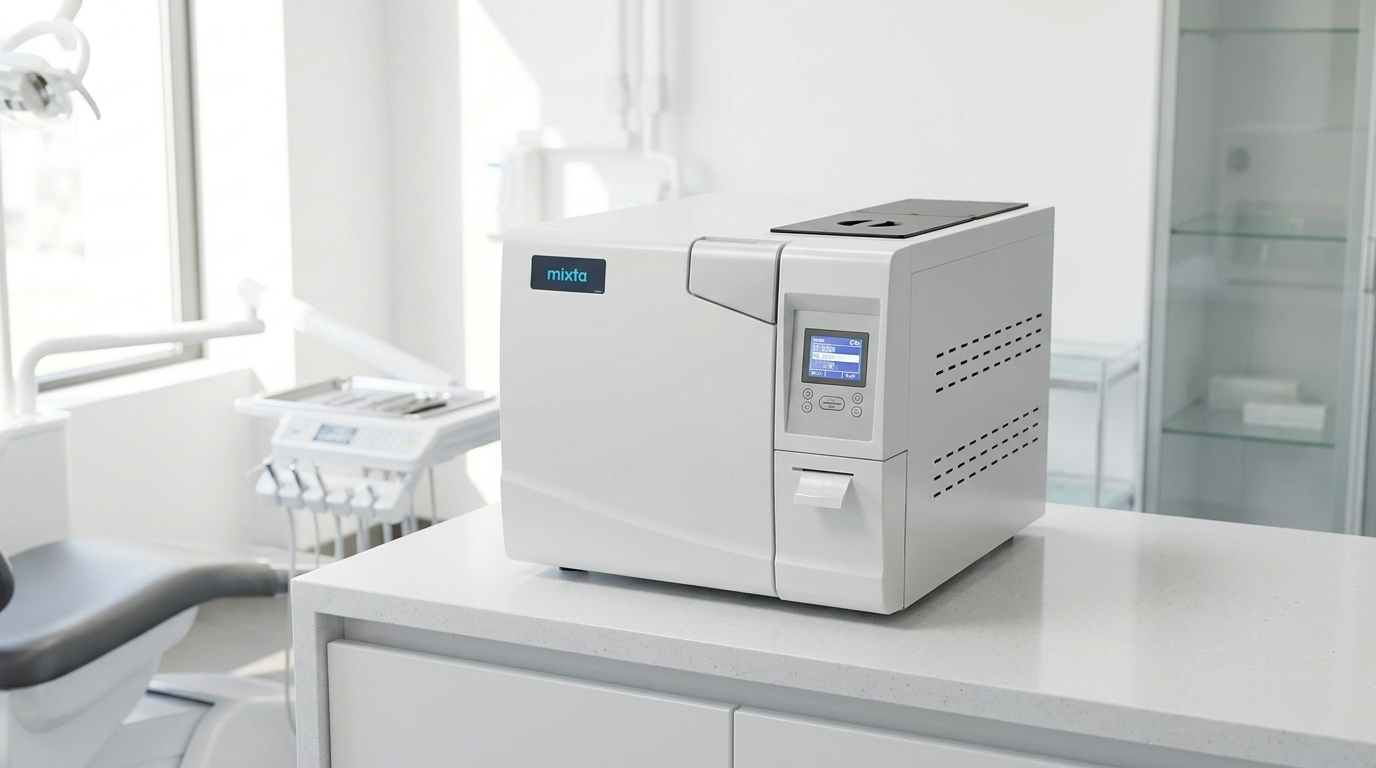
Single-Door Large Steam Sterilizers
Single-door large steam sterilizers represent the backbone of hospital Central Sterile Supply Departments (CSSDs) worldwide. With chamber volumes starting at 90 liters and extending to 845 liters, these units handle the full range of wrapped surgical instrument sets, textile packs, porous loads, and hollow instruments that a hospital generates every day.
These sterilizers comply with EN 285, which defines requirements for steam sterilizers with a chamber volume of at least 60 liters used in healthcare. EN 285 specifies: sterilization temperature of 134°C for a minimum of 3 minutes, steam quality parameters including a non-condensable gas content below 3.5%, and feed water limits such as conductivity ≤15 µS/cm and chloride ≤2 mg/L.
Single-door units are loaded and unloaded from the same side of the chamber. They are the right choice when:
- Your CSSD operates in a single-corridor layout where clean and dirty flows are separated procedurally (not architecturally)
- You need flexible positioning without a pass-through wall
- Budget constraints favor a single-door configuration
Capacity selection follows a straightforward principle: size the chamber to process your peak half-day load in one cycle. A surgical unit with 8–10 instrument trays may require a 150–200 L chamber; a busy public hospital with 30+ daily surgical sets may need 500–845 L with two sterilizers running in parallel for redundancy.
The global hospital autoclave market — dominated by large steam sterilizers — was valued at $12.85 billion in 2025 and is projected to reach $20.84 billion by 2033 at a 6.35% CAGR, reflecting the rising global demand for high-capacity hospital sterilization capacity.
Double-Door Pass-Through Steam Sterilizers
Double-door steam sterilizers are architecturally identical to single-door units in terms of chamber size and sterilization performance, but they feature two interlocked doors — one on the "dirty" side where soiled instruments enter, and one on the "clean" side where sterilized packages are retrieved.
This physical separation is not optional in many modern healthcare settings. Facilities seeking JCI accreditation or complying with international infection control standards are required to maintain strict unidirectional workflow in the CSSD: soiled instruments move in one direction only, never crossing paths with sterile output.
The double-door interlock mechanism is the key safety feature. Both doors cannot be opened simultaneously — the clean-side door is locked until the sterilization cycle completes, preventing contamination of the sterile field. This eliminates the risk of unprocessed instruments accidentally entering the sterile storage area, which is one of the most common CSSD workflow errors.
Double-door autoclaves are the standard choice for:
- Hospital CSSDs with dedicated dirty and clean utility rooms separated by a pass-through wall
- Operating theatre complexes with on-site sterile processing
- Biocontainment facilities and pharmaceutical clean rooms requiring validated zone separation
- Any facility targeting JCI, ISO 13485, or equivalent accreditation
The MEA (Middle East and Africa) steam autoclave market, driven by large hospital infrastructure projects in Saudi Arabia and the UAE, is forecast to grow to $0.22 billion by 2027, with double-door pass-through configurations increasingly specified in new hospital tenders across the region.
How to Choose: Capacity and Facility Guide
Matching your facility to the right autoclave type requires three inputs: daily sterilization volume, facility layout, and applicable regulatory standards.
| Facility Type | Recommended Type | Capacity Range | Standard |
|---|---|---|---|
| Dental clinic | Flash / Class B tabletop | 18–45 L | EN 13060 |
| Veterinary clinic | Flash / Class B tabletop | 18–45 L | EN 13060 |
| Outpatient surgical center | Single-door large | 90–150 L | EN 285 |
| Small hospital (≤100 beds) | Single-door large | 150–300 L | EN 285 |
| Mid-size hospital (100–300 beds) | Single-door or double-door | 300–500 L | EN 285 |
| Large hospital CSSD (>300 beds) | Double-door pass-through | 500–845 L | EN 285 |
| JCI-accredited or ISO facility | Double-door pass-through | 300–845 L | EN 285 |
Redundancy planning is a commonly overlooked factor. A single autoclave serving a busy surgical department creates a throughput bottleneck during maintenance cycles or validation holds. Facilities processing more than 20 instrument sets per half-day should plan for at least two units — either two mid-size chambers or one large chamber plus a backup unit.
Mixta offers single-door and double-door steam sterilizers ranging from 90 L to 845 L (MADDA and MASDA series), all compliant with EN 285+A1, allowing facilities to select the exact capacity tier they need without over-specifying or under-specifying their sterilization infrastructure. Understanding the types of autoclave sterilizer available across this capacity range is essential for accurate procurement. Explore Mixta steam sterilizers →
Maintenance and Validation
Regardless of autoclave type, ongoing validation is a regulatory requirement under EN 285, EN 13060, and most national healthcare standards. Key validation activities include:
- Bowie-Dick test: Daily test for pre-vacuum sterilizers to verify steam penetration into porous loads. Performed at the start of each working day before the first patient load.
- Biological indicators (BIs): Weekly or per-load verification using spore strips (typically Geobacillus stearothermophilus) to confirm sterilization efficacy.
- Annual calibration: Temperature probes, pressure sensors, and timing systems must be calibrated annually by an accredited service provider.
- Water quality checks: Feed water and steam condensate must meet EN 285 Annex B limits. Hard or contaminated water accelerates chamber corrosion and causes sterilization failures.
Facilities that skip validation steps are at elevated risk of undetected sterilization failures. A cross-sectional study published in PLOS ONE found that 71% of autoclave cycles tested across a national hospital network were ineffective when measured with biological indicators — underlining that the choice of equipment is only the first step, not the whole solution.
Conclusion
The three main types of autoclave sterilizer — flash tabletop units, single-door large sterilizers, and double-door pass-through sterilizers — each serve a distinct role in healthcare sterilization. Selecting the correct types of autoclave sterilizer for your context directly affects patient safety, throughput, and regulatory compliance. No single type is universally superior; the right choice depends on your facility's sterilization volume, spatial layout, and compliance requirements.
Key takeaways:
- Flash autoclaves (EN 13060, Class B) are the right tool for dental, veterinary, and outpatient settings with limited instrument volume and space.
- Single-door large sterilizers (EN 285, 90–845 L) are the workhorse of any hospital CSSD operating in a single-zone workflow.
- Double-door pass-through sterilizers (EN 285, 90–845 L) are mandatory for facilities requiring physical clean/dirty zone separation and for JCI or ISO accreditation.
Matching capacity to your daily peak load — and building in redundancy — is as important as the type selection itself. If you are specifying a CSSD for a new facility or upgrading an existing one, consulting a sterilization equipment specialist before purchasing will save significant cost and rework downstream.
Explore Mixta Medikal's full range of EN 285-compliant steam sterilizers, from compact 90 L single-door models to 845 L double-door pass-through configurations: View Mixta Steam Sterilizers →
FAQ
What is the difference between a flash autoclave and a large steam sterilizer?
A flash (tabletop) autoclave is a compact unit under 60 liters designed for rapid, immediate-use sterilization of unwrapped instruments in small clinics. A large steam sterilizer has a chamber of 90 liters or more and is built for high-volume, wrapped-load sterilization in hospital CSSDs, complying with EN 285.
When do I need a double-door instead of a single-door autoclave?
A double-door (pass-through) autoclave is required when your facility must physically separate the soiled instrument intake zone from the sterile output zone — a standard requirement in hospital CSSDs, operating theatres, and facilities seeking JCI accreditation.
What temperature does an autoclave sterilizer operate at?
Standard steam sterilization cycles run at 121°C (250°F) or 134°C (273°F). Hospital-grade pre-vacuum sterilizers typically use 134°C for a minimum of 3–4 minutes, as defined in EN 285 and AAMI ST79.
What is EN 285, and why does it matter?
EN 285 is the European standard for large steam sterilizers (chamber ≥60 liters). It defines performance, steam quality, water quality, and validation requirements. Purchasing an EN 285-compliant autoclave ensures your unit meets regulatory expectations for hospital-grade sterilization across the EU and many international markets.
How do I calculate the autoclave capacity my facility needs?
Identify the number of instrument sets used during your busiest half-day. Size your autoclave chamber to process that peak load in a single cycle. Small clinics typically need 18–45 L tabletop units; medium-sized surgical centers need 90–300 L; large hospital CSSDs require 300–845 L with optional double-door configuration.
Hello!
Can I help you?
08:34