





CSSD Guide: Central Sterile Supply Department Setup, Zones & Planning
Every year, approximately 722,000 healthcare-associated infections (HAIs) occur in US hospitals alone, costing the healthcare system an estimated $28–33 billion in excess costs and claiming around 75,000 lives (CDC). The central sterile supply department (CSSD) is where that risk is either controlled or compounded.
Yet despite its critical role, the CSSD is one of the most underplanned departments in hospital design. A poorly zoned layout, undersized autoclave, or missing traceability system can quietly drive up infection rates — and fail accreditation audits.
This guide covers everything you need to set up, plan, or upgrade a CSSD: zone design, 8-step reprocessing workflow, equipment selection, capacity formulas, global compliance standards, and digital traceability.
Table of Contents
- What Is a Central Sterile Supply Department?
- Why CSSD Design Determines Infection Outcomes
- Physical Zoning: The 4-Area Model
- The 8-Step Reprocessing Workflow
- Core Equipment Guide
- Capacity Planning: Sizing Your CSSD
- Compliance Standards at a Glance
- Traceability & Digital Integration
- FAQ
What Is a Central Sterile Supply Department (CSSD)?
A central sterile supply department (CSSD) — also called a sterile processing department (SPD), central supply department (CSD), or central service department — is the hospital unit responsible for cleaning, decontaminating, packaging, sterilizing, and distributing all reusable medical devices: surgical instruments, textile items, implant containers, and procedure trays.
The term CSSD is preferred internationally; SPD is dominant in North America. Both refer to the same function.
The CSSD's core responsibilities fall into four categories:
- Reprocessing: Cleaning, disinfecting, and sterilizing used instruments to safe, sterile condition
- Quality assurance: Recording every sterilization cycle, monitoring indicators, and archiving results
- Distribution: Delivering sterile sets to the right clinical area at the right time
- Consultation: Advising clinical departments on reprocessing compatibility and sterile technique
Why CSSD Design Determines Infection Outcomes
A well-run CSSD does not just clean instruments — it directly reduces patient harm. A 2024 systematic review and meta-analysis published in PMC found that improved CSSD management reduced HAIs with a pooled odds ratio of 0.30, meaning properly managed CSSDs cut HAI probability by roughly 70% compared to poorly managed ones (NCBI, 2024).
Traceability data reinforces this: facilities implementing barcode-based tracking saw cleaning protocol compliance rise from 78.5% to 96.4%, with a corresponding 42.6% reduction in HAI rates — from 5.4 to 3.1 infections per 1,000 patient days.
The CSSD equipment and services market reflects this strategic importance. The global CSSD market reached $43.4 billion in 2025 and is projected to grow at 8.1% CAGR, reaching $74.4 billion by 2032 (QY Research), driven by tightening infection control regulations worldwide.
Physical Zoning: The 4-Area Model
The single most important design principle in any CSSD is unidirectional flow: contaminated instruments move in one direction only — from dirty to clean to sterile — and never reverse course. This is achieved through four physically separated zones.
Zone 1: Decontamination (Dirty Zone)
This area receives soiled instruments from the OR, ICU, and wards. It accounts for approximately 35% of the total CSSD footprint. Key requirements:
- Separate dirty-side entry corridor to prevent contamination spread
- Negative air pressure to contain airborne contaminants
- Temperature 16–18°C (staff comfort under PPE)
- Stainless steel sinks and surfaces, epoxy-sealed floors
- Washer-disinfectors and ultrasonic cleaners positioned here
Zone 2: Inspection, Assembly & Packaging (Clean Zone)
Cleaned and disinfected instruments are inspected, assembled into sets, and packaged in this area. Requirements:
- Positive air pressure (higher than decontamination zone)
- Temperature 23–24°C
- Bright task lighting for instrument inspection
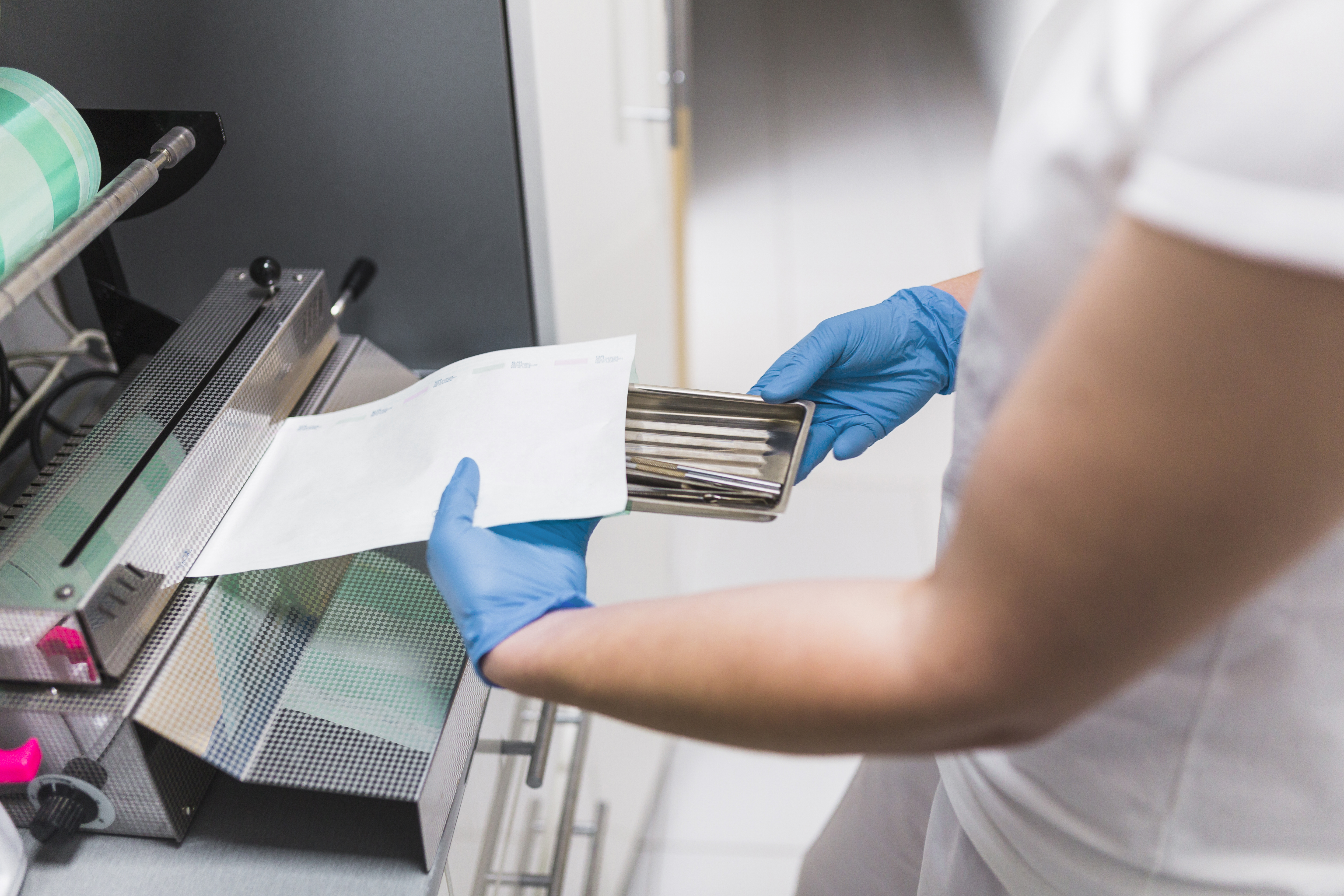
- Sealing equipment, labelling station, barcode scanning point
Zone 3: Sterilization
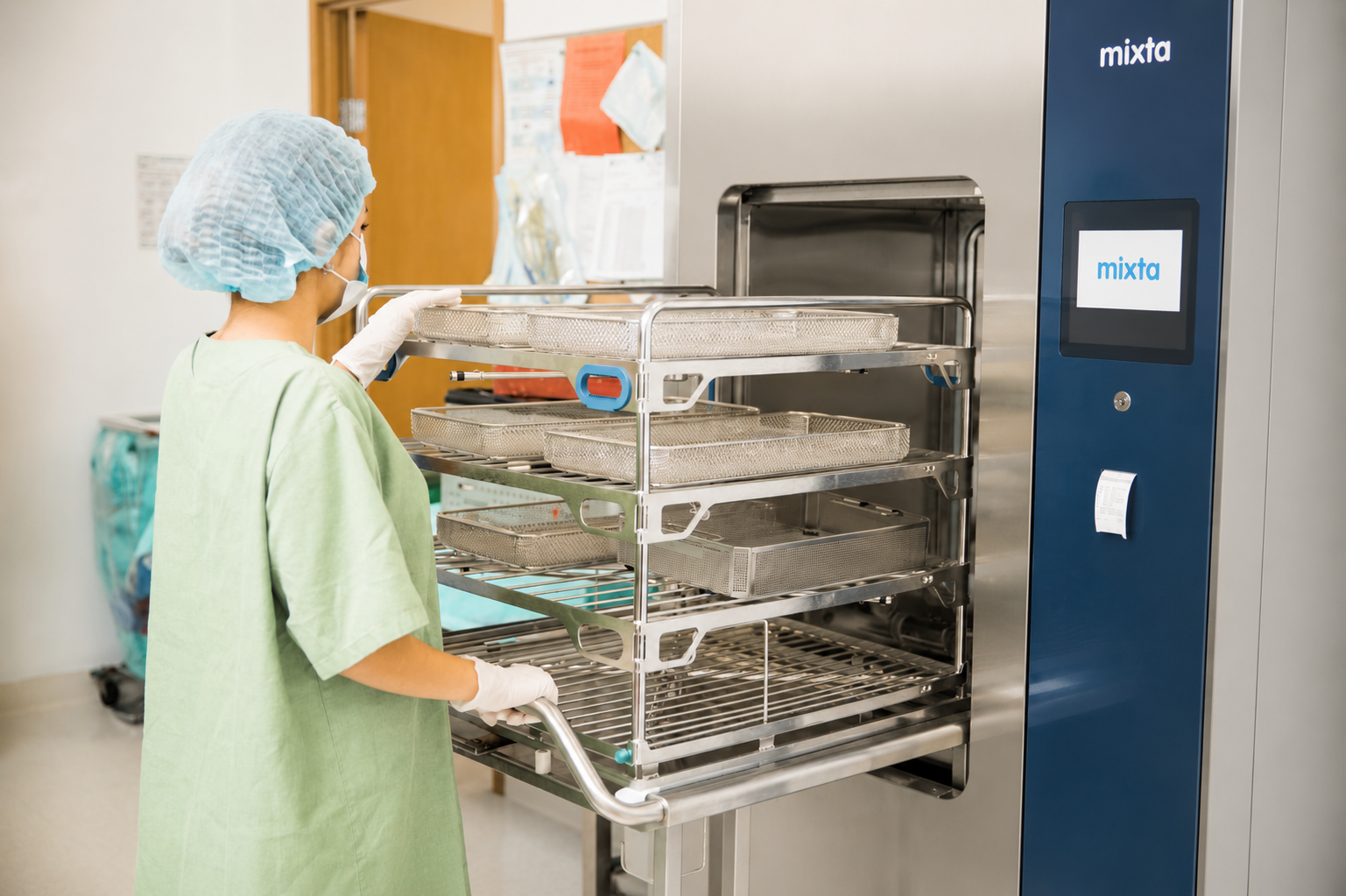
Packaged sets are loaded into steam sterilizers (autoclaves) on the clean side. With double-door (pass-through) autoclaves, the unloading door opens directly into the sterile zone — the physical barrier between zones is the autoclave chamber itself.
Zone 4: Sterile Storage & Distribution
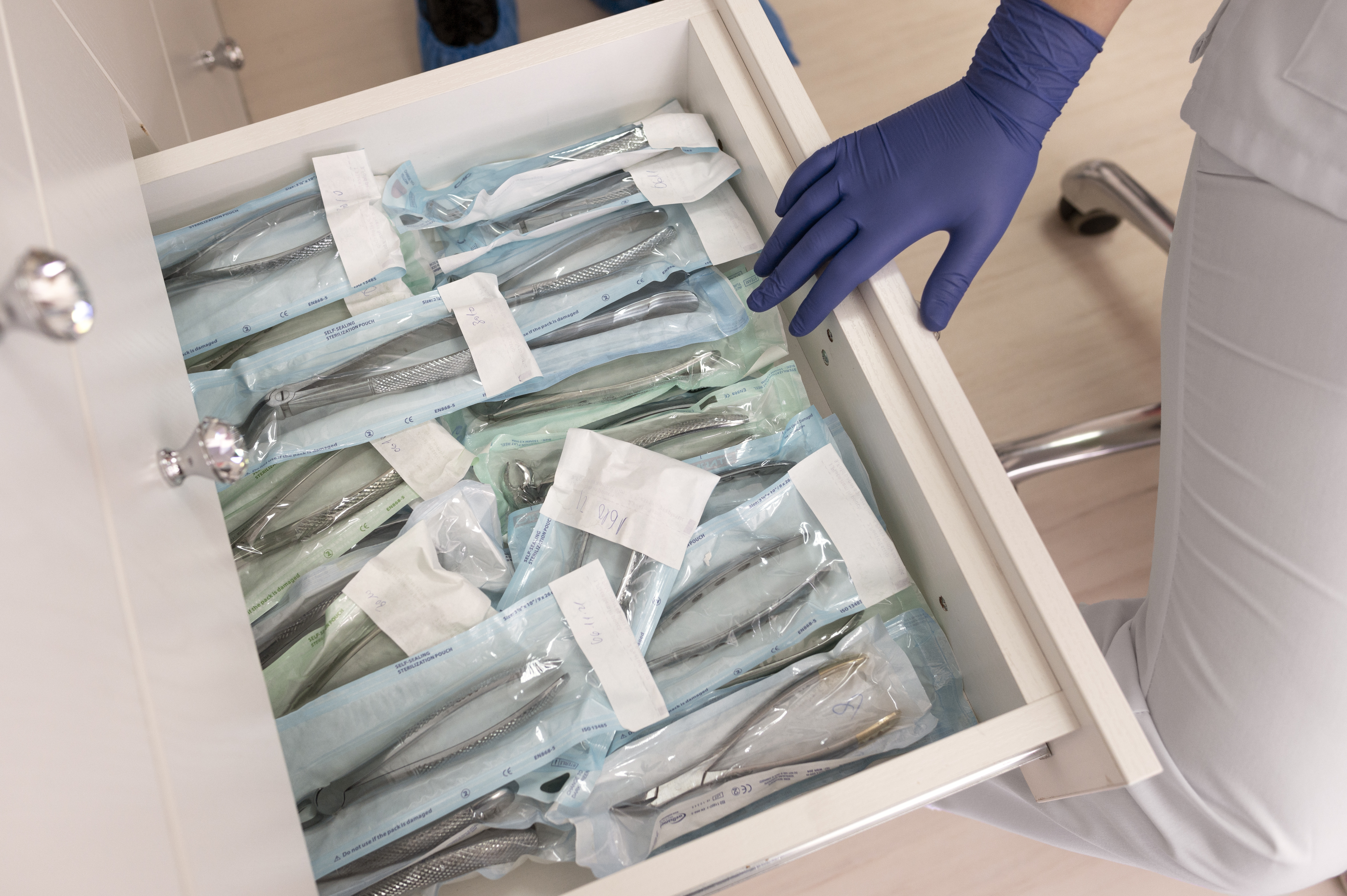
Sterilized sets are held here until dispatched to clinical units. Positive pressure is maintained. FIFO (first in, first out) shelf rotation and automated expiry alerts are managed here through the traceability system.
Ventilation targets:
| Zone | Air pressure | Air changes/hour (ACH) | Temperature |
|---|---|---|---|
| Decontamination | Negative | 10–20 | 16–18°C |
| Inspection & packaging | Positive | 10–20 | 23–24°C |
| Sterile storage | Positive | 4–10 | ≤24°C |
Location: The CSSD should be on the same floor as — or immediately adjacent to — the operating theaters and ICU. Every extra meter of transport is a contamination risk and an efficiency cost.
The 8-Step Reprocessing Workflow
The CSSD operational cycle starts the moment a soiled instrument leaves the OR and ends when the sterile set returns to clinical use. All eight steps must be completed without skipping or reversing.
Step 1: Point-of-Use Pre-cleaning Surgical technicians wipe instruments during the procedure with sterile water and a laparotomy sponge. Dried organic matter is far harder to remove — pre-cleaning prevents it.
Step 2: Dirty Receipt Used instruments arrive in closed, labelled containers or transport carts. Staff in full PPE (gloves, goggles, mask, gown) receive and log incoming loads at the decontamination entry point.
Step 3: Ultrasonic Cleaning High-frequency sound waves generate cavitation bubbles that dislodge organic and inorganic residue from joints, lumens, and crevices — areas manual brushing cannot reliably reach.
Step 4: Washer-Disinfector Automated washer-disinfectors run enzymatic detergent wash cycles followed by thermal disinfection at ≥93°C (A0 value ≥3000, per ISO 15883). Cycle parameters are logged automatically by the machine.
Step 5: Inspection & Drying Dried instruments are examined under bright light: cracks, corrosion, bent joints, fatigue, or residual soil. Defective items are routed to repair or disposal.
Step 6: Assembly, Packaging & Labelling Sets are assembled to validated tray lists, wrapped in appropriate packaging (pouches, rigid containers, woven/non-woven wrap), and sealed. Each package receives a label with: contents, chemical indicator, operator ID, date, lot number, and barcode.
Step 7: Sterilization Packages are loaded into the steam sterilizer. Standard hospital cycle: 134°C for a minimum 3-minute hold time (EN 285). Each cycle includes a chemical indicator check; a biological indicator (BI) is used at least weekly — or on the first cycle of the day.
Step 8: Cooling, Storage & Distribution Sterilized sets cool in a designated area before being moved to sterile storage. A wet pack is never considered sterile. Sterile sets are dispatched using FIFO to clinical units on request.
Core Equipment Guide
Choosing the right equipment for each stage eliminates workflow bottlenecks before they occur.
| Equipment | Function | Key Selection Criterion |
|---|---|---|
| Steam sterilizer (autoclave) | Final sterilization at 134°C, pre-vacuum | EN 285+A1 compliance, cycle time, door type |
| Washer-disinfector | Automated washing + thermal disinfection | ISO 15883 compliance, basket capacity |
| Ultrasonic cleaner | Lumen and joint cleaning | 35–45 kHz frequency, tank volume, filtration |
| Impulse sealer | Pouch sealing | Weld quality verification, parametric recording |
| Biological indicator incubator | Sterilization efficacy verification | 1-hour read capability, auto alarm |
| Water treatment system | Purified water supply for equipment | EN 285 Annex B limits (conductivity ≤15 µS/cm) |
Single-Door vs Double-Door Autoclave
A double-door (pass-through) autoclave is required whenever a physical barrier wall separates the clean and sterile zones. Both doors are interlocked — they cannot open simultaneously. This prevents contaminated air or materials from bypassing the sterilization cycle. Double-door configuration is mandatory for JCI accreditation and recommended for any CSSD with a three- or four-zone physical layout.
A single-door autoclave is appropriate for facilities with space constraints or a two-zone layout, provided strict loading and unloading protocols are enforced.
Mixta's MADDA and MASDA series steam sterilizers are available in single- and double-door configurations from 90 L to 845 L chamber volume, all compliant with EN 285+A1. Explore Mixta autoclave series →
Capacity Planning: Sizing Your CSSD
CSSD capacity cannot be sized by bed count alone. Surgical case volume, tray complexity, cycle time, and shift patterns must all be modeled together.
Capacity formula:
(Daily surgical cases × average tray load per case) ÷ sterilizer cycles per shift = minimum required autoclave chamber volume
Variables to analyze:
- Peak-hour demand: The total tray count in the busiest half-day is the true design load
- Tray volume: Large orthopedic or cardiovascular sets consume far more chamber space than small endoscopy trays
- Total cycle time: A full steam sterilization cycle (loading + pre-vacuum + sterilization + ventilation + unloading) typically runs 45–75 minutes
- Washer-disinfector throughput: The washing line must feed the sterilizer without bottleneck
- Redundancy: A minimum of two autoclaves ensures operations continue during maintenance
Space sizing guide:
| Hospital profile | Recommended autoclave capacity | Configuration |
|---|---|---|
| Under 50 beds / outpatient | 90–150 L | Single-door |
| 50–150 beds | 150–300 L | Single or double-door |
| 150–300 beds | 300–500 L | Double-door + backup |
| 300+ beds / teaching hospital | 500–845 L × 2+ | Double-door, parallel lines |
Floor space: Plan for 0.7–1.0 m² per hospital bed (7–10 sq ft). Underground or semi-basement locations are not recommended due to ventilation and transport constraints.
Compliance Standards at a Glance
CSSD operations are governed by a layered framework of international standards and national regulatory requirements.
Steam sterilization: EN 285 (Europe) defines requirements for large steam sterilizers. ISO 17665-1 covers validation and routine control of moist-heat sterilization for medical devices. In the US, ANSI/AAMI ST79 is the primary reference document.
Washer-disinfectors: ISO 15883 Parts 1 and 2 specify performance and test requirements for thermal disinfection in automated washer-disinfectors.
Regulatory bodies: The Joint Commission (US), AFNOR (France), and national health ministries set facility-level compliance requirements. JCI accreditation specifically mandates double-door autoclaves and documented traceability systems.
Staff certification: The CRCST (Certified Registered Central Service Technician), awarded by the Healthcare Sterile Processing Association (HSPA), is the leading US credential — requiring 400 hours of hands-on experience plus a 150-question exam. The CSPDT (CBSPD) is an equivalent alternative. Both demonstrate that personnel can clean, inspect, assemble, package, and sterilize to validated standards.
Traceability & Digital Integration
Modern CSSD management treats traceability as the digital backbone of quality assurance. Barcode- or RFID-based systems:
- Link every instrument set to its cleaning operator, packaging date, and sterilization cycle
- Associate each set with the patient it was used on — enabling rapid, targeted recalls
- Automate shelf-life tracking and generate expiry alerts before sets leave the sterile store
- Produce audit-ready reports for Joint Commission, JCI, and ISO inspections on demand
The outcome data is compelling. After implementing traceability systems, hospitals in a 2024 NCBI study saw protocol compliance jump from 78.5% to 96.4% and HAI rates fall 42.6%. Assembly defects dropped from 2.59% to 0.24% in a parallel HACCP-integrated CSSD study (Nature Scientific Reports, 2025).
The investment pays for itself in avoided infection costs — and in accreditation confidence.
A central sterile supply department is not a back-office function — it is the infection control infrastructure that every surgical case, ICU procedure, and sterilized instrument depends on. Getting the design right from the start means specifying the correct zone layout, choosing appropriately sized and certified autoclaves, building in redundancy, training certified staff, and deploying a traceability system.
If you are planning a new CSSD or upgrading an existing one, autoclave selection sits at the center of that planning. For a detailed comparison of steam sterilizer types, see our autoclave types guide. Mixta's EN 285+A1-compliant MADDA and MASDA series covers every CSSD scale — from 90 L single-door units for outpatient facilities to 845 L double-door pass-through configurations for large teaching hospitals.
Contact our technical team for capacity calculation and product selection: Mixta steam sterilizers →
FAQ
What is the difference between CSSD and SPD?
CSSD (Central Sterile Supply Department) and SPD (Sterile Processing Department) refer to the same hospital unit. CSSD is the internationally preferred term; SPD is more common in the United States.
When is a double-door pass-through autoclave required?
A double-door pass-through autoclave is required whenever a physical barrier wall separates the clean and sterile zones. The interlocked doors prevent both sides from opening simultaneously, eliminating cross-contamination risk. JCI accreditation and most modern CSSD design standards recommend it.
How much space does a CSSD need per hospital bed?
Guidelines recommend 0.7–1.0 m² (7–10 sq ft) per hospital bed. The exact figure depends on surgical case volume, tray complexity, and shift patterns — bed count alone is not sufficient for accurate planning.
What certifications do CSSD staff need?
In the US, the CRCST (Certified Registered Central Service Technician) from HSPA is the leading credential, requiring 400 hours of hands-on experience plus a written exam. The CSPDT from CBSPD is an equivalent alternative. Internationally, requirements vary by country and national health authority.
How do I calculate autoclave capacity for my facility?
Use this formula: (daily surgical cases × average tray load per case) ÷ sterilizer cycles per shift = minimum required chamber volume. Always plan for at least two autoclaves so maintenance downtime never halts operations.
Hello!
Can I help you?
08:35